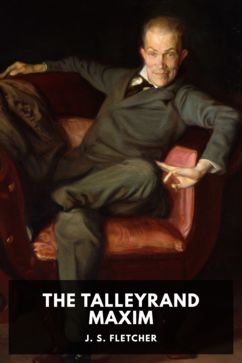
The Talleyrand Maxim - J. S. Fletcher
The Story
The book opens with the sudden death of John Mallathorpe, a rich but reclusive man. His entire estate is left to his nephew, Linford Pratt. There's just one problem: the fortune everyone knew Mallathorpe had is nowhere to be found. The banks are empty, and there are no hidden stocks or bonds.
Pratt, who is sharp and determined, finds a clue in his uncle's papers: a reference to the "Talleyrand Maxim." This historical quote suggests that speech can be used to hide the truth. Pratt becomes convinced his uncle was sending a message. The search for the money becomes a puzzle where every family member, business associate, and old document might hold a piece of the answer. The mystery deepens with hints of a possible murder, turning a financial hunt into a dangerous investigation.
Why You Should Read It
This book is a fantastic example of a "howdunit" rather than just a "whodunit." The real pleasure is watching Linford Pratt think his way through the problem. He's not a superhero; he's a logical, persistent man using his wits. The pace is deliberate, letting the clues and characters breathe, which makes the final solution feel earned and satisfying.
I also love the central idea of the Talleyrand Maxim itself. It makes you look at every conversation and letter in the story with suspicion. Fletcher plays a great game with the reader, making us question what's been said and what's been left unsaid. The setting feels authentic without being overly detailed, placing you right in the drawing rooms and offices of a bygone era.
Final Verdict
Perfect for readers who enjoy classic, brainy mysteries in the style of early 20th-century writers. If you like stories where the puzzle is solved through deduction and paperwork rather than action sequences, this is for you. It’s also a great pick for anyone curious about historical fiction that focuses on law and finance, with a clever twist. A solid, engaging read that proves sometimes the best treasures are hidden in plain sight—or in a carefully chosen phrase.
No rights are reserved for this publication. Access is open to everyone around the world.
Michael Smith
1 year agoFrom a researcher's perspective, it addresses the common misconceptions in a very professional manner. Well worth the time invested in reading it.
Paul Johnson
1 year agoI stumbled upon this title during my weekend research and the clarity of the writing makes even the most dense sections readable. I'm glad I chose this over the other alternatives.
Sarah Rodriguez
5 months agoGiven the current trends in this field, the breakdown of complex theories into digestible segments is masterfully done. Definitely a five-star contribution to the field.
John Jackson
7 months agoI started reading this with a critical mind, the concise summaries at the end of each section are a lifesaver. A refreshing and intellectually stimulating read.

James Brown
10 months agoWhile browsing through various academic sources, the visual layout and supporting data make the reading experience very smooth. This has become my go-to guide for this specific topic.