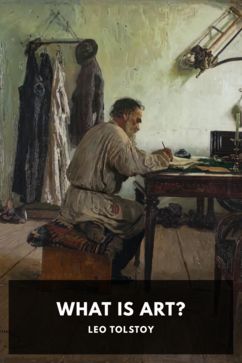
What Is Art? - Leo Tolstoy
Don't let the title fool you—this isn't a dry textbook. Tolstoy's 'What Is Art?' is more like a passionate, 200-page argument he's having with the entire cultural establishment of his time (and, let's be honest, ours). He's fed up with art that only serves the wealthy and educated. He thinks a lot of celebrated 'masterpieces' are just empty technical exercises or confusing intellectual puzzles.
The Story
There's no plot or characters here. Instead, Tolstoy builds his case like a lawyer. He starts by dismissing all the old definitions of art based on beauty or pleasure. Then, he lays out his own, radical standard: art is a form of communication. The artist feels a strong emotion, captures it in their work (a painting, a symphony, a story), and transmits that same feeling directly to the audience. If you feel it, the art succeeded. If you don't, it failed—no matter how famous the artist is. He uses this simple, powerful idea to judge everything from Beethoven's symphonies to his own novels, often with shocking results. The second half of the book is where he gets really fired up, criticizing the art world as a closed-off, elitist system and arguing that the best art is universal, clear, and deals with the most important human feelings: our longing for brotherhood and our relationship to God and each other.
Why You Should Read It
You should read this because it's genuinely thrilling to watch a genius question everything. Even when you disagree with him (and you will—his take on Shakespeare is brutal!), his conviction is magnetic. He forces you to have an opinion. After reading this, you won't just passively consume art; you'll have a new tool to evaluate it. Does this song actually move me, or do I just think I'm supposed to like it? Is this painting saying anything, or is it just decoration? It's incredibly empowering. It strips away the snobbery and brings art back to a human, emotional level.
Final Verdict
This book is perfect for anyone who's ever felt like an outsider in a museum or at the opera. It's for the reader who loves big, challenging ideas presented with fiery honesty. It's also a fascinating look into the mind of a great artist wrestling with the purpose of his own life's work. If you enjoy having your assumptions turned upside down and don't mind if a book is more of a brilliant, flawed rant than a balanced essay, you'll find 'What Is Art?' absolutely unforgettable. Just be prepared to get into a few arguments about it afterwards.
This content is free to share and distribute. Access is open to everyone around the world.
Aiden Rodriguez
1 year agoFinally a version with clear text and no errors.
Elizabeth Thompson
3 months agoA must-have for graduate-level students in this discipline.