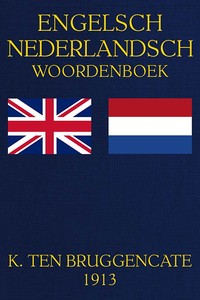
Engelsch woordenboek. Eerste deel: Engelsch-Nederlandsch (met uitgeschreven…
Let's be clear from the start: Engelsch woordenboek. Eerste deel: Engelsch-Nederlandsch is exactly what it says it is. Published in 1897, it's the first volume of an English-Dutch dictionary compiled by Karel ten Bruggencate, a dedicated Dutch educator. The plot, so to speak, is the creation of the book itself. It follows the meticulous process of defining, translating, and organizing thousands of English words for a Dutch audience hungry for knowledge of the language. The 'characters' are the words, and the 'conflict' is the challenge of capturing their precise meaning and nuance in another tongue.
Why You Should Read It
You don't read this cover-to-cover like a novel. You dip into it. And when you do, you feel the author's presence. This was a labor of love and duty, created letter by letter in an age of pen and ink. Flipping through its pages, you see history frozen in the vocabulary of the late 1800s. It’s surprisingly personal. You can almost feel Ten Bruggencate's determination to get it right, to build a reliable tool for his students and countrymen. It turns a utilitarian object into a story of human effort.
Final Verdict
This is a book for a specific kind of curious mind. It's perfect for lovers of language history, bibliophiles who appreciate the physical craft of old books, or anyone fascinated by the quiet, scholarly pursuits of the past. It's not for someone looking for a narrative. But if you've ever wondered about the person behind a reference book, this volume offers a silent, powerful answer. It’s a monument to a single, focused passion.
Legal analysis indicates this work is in the public domain. You do not need permission to reproduce this work.
Donald Ramirez
2 years agoBased on the summary, I decided to read it and the emotional weight of the story is balanced perfectly. One of the best books I've read this year.
Lisa Nguyen
1 year agoText is crisp, making it easy to focus.
Joseph Taylor
1 year agoI had low expectations initially, however the narrative structure is incredibly compelling. Exceeded all my expectations.
Thomas Robinson
5 months agoGreat reference material for my coursework.

Oliver Rodriguez
2 years agoI was skeptical at first, but it manages to explain difficult concepts in plain English. I learned so much from this.