
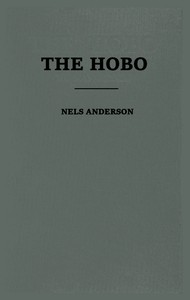
The Hobo: The Sociology of the Homeless Man by Nels Anderson
The Hobo isn't a novel with a plot in the usual sense. Its "story" is the journey of Nels Anderson himself, a young sociologist in the 1920s. To research his subject, he didn't sit in a library. He became a hobo. He traveled across America by hopping freight trains, lived in homeless shelters called "jungles," and worked temporary jobs alongside the men he was studying.
The Story
The book maps out this invisible world. Anderson explains the complex system of hobo life: the unwritten rules of the road, the secret symbols left on fences to signal where to find a meal or avoid the police, and the clear social classes among homeless men (from the seasonal worker to the chronic wanderer). He shows it as a whole culture with its own economy and ethics, not just a collection of down-and-out individuals.
Why You Should Read It
What got me was the respect Anderson has for his subjects. He doesn't paint them as saints or villains. They're just people navigating a tough situation, and he shows their ingenuity, camaraderie, and flaws. Reading his firsthand accounts—like descriptions of a hobo "jungle" camp or the dangerous art of train-hopping—feels incredibly immediate. It shatters a lot of modern stereotypes by showing the reality from the inside.
Final Verdict
This is perfect for anyone interested in American history, sociology, or true stories about hidden subcultures. It's a foundational piece of research, but it reads like compelling journalism from another time. Be prepared for the language and attitudes of the 1920s, but look past that, and you'll find a profoundly human document that's still relevant today.
This historical work is free of copyright protections. Access is open to everyone around the world.
Mary Lopez
1 year agoI have to admit, the emotional weight of the story is balanced perfectly. Absolutely essential reading.
Deborah Allen
2 years agoI didn't expect much, but it creates a vivid world that you simply do not want to leave. Worth every second.
Melissa Young
1 year agoWithout a doubt, the clarity of the writing makes this accessible. Exceeded all my expectations.
Richard Anderson
2 years agoThanks for the recommendation.



Joshua Scott
4 months agoI stumbled upon this title and it manages to explain difficult concepts in plain English. Definitely a 5-star read.